
The 12-hour bandh was called by the Trinamool Congress against farmland acquisition for a Tata Motors project.
Posting a remarkable turnaround after a dip in sales for three previous months, Maruti Suzuki sold a record 67,005 vehicles in the domestic market--the highest ever in a month in its 25-year history--reflecting a 5.6 per cent growth over January 2008. The previous sales record was 65,216 units, notched up in November 2007, when there was no slowdown.

India will have 30 per cent of its two-wheeler industry turning electric by 2030 as new manufacturers lead the shift, said a report on Monday. Passenger vehicles will be 15 per cent electric and the three-wheeler segment 75 per cent electric by 2030, said the report by BNP Paribas called 'India Autos-Electric vehicles: Minutes to midnight'. "We see FY22 as the year of inflection for the two-wheeler EV industry, with an accelerated EV adoption helped by incentives, wider availability, model launches, rise in crude prices and improved general awareness. We see 30 per cent of the 2W industry turning electric by 2030; the pace of incentive withdrawal presents an upside/downside risk," the report (India Autos - Electric vehicles: Minutes to midnight) said.
The growing impact of inflation on car sales is clearly reflected in the dismal growth in domestic sales of the country's three leading auto-makers - Maruti Suzuki, Hyundai India and Tata Motors - which constitute more than 75 per cent of the car sales.
The trade between India and Saudi Arabia is growing rapidly with the bilateral trade crossing USD 9.87 billion last year.

Car sales likely to touch record 3-mn mark by the end of March.
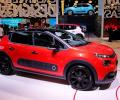
Of the 15 car manufacturing companies in India, eight have a market share of below 2 per cent, raising questions about their long-term future in a competitive market that has already seen Ford Motors and General Motors slam the door on India.

Is the Hexa more than a repackaged Aria? Clearly, yes! The Hexa has been arrived at after thoroughly revamping it from nose to tail, inside and out
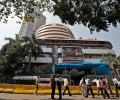
There were more than three losers against every gainer on BSE

According to research by IHS Markit, for an ecosystem still grappling with infrastructure issues -- the high cost of EVs and a greater OEM (original equipment manufacturer) focus on electrifying two-wheelers and commercial vehicles first -- the share of such vehicles is expected to be 4 per cent by 2030, reports Pavan Lall.
Sales of passenger vehicles in India are likely to grow at 14.9 per cent each year to touch the 2.1 million mark by 2010.

Sensex seems to be under pressure on weak cues.

'We aim at establishing India as an early talent hub on a global scale and are actively recruiting professionals in areas like cybersecurity, machine learning, data science, and other relevant fields.'

The Fed interest rate decision, domestic macroeconomic data announcements and quarterly earnings will be the major sentiment drivers for the equity market in a holiday-shortened week ahead, analysts said. Investors will also take cues from the monthly auto sales numbers to be announced on Monday. Equity markets will remain closed on Thursday for Diwali Laxmi Pujan and on Friday for Diwali Balipratipada.

Buying a car, particularly a diesel-powered one, is set to pinch the customers' pockets even more from the next financial year, as the second phase of Bharat Stage VI (BSVI) emission norms kicks in. The rules require cars to be compliant with real driving emission (RDE) norms, which measure pollutants emitted by cars while they are being driven on the road, unlike in a laboratory test. The norms may increase the cost of producing diesel vehicles by nearly Rs 75,000 to Rs 80,000, and petrol-powered ones by Rs 25,000 to Rs 30,000, analysts said.

India Inc's cash pile was up 13.8 per cent last fiscal year, thanks to a combination of higher profits in sectors such as IT and fund raising by top companies such a Reliance Industries, Bharti Airtel and Tata Motors, among others.
Accelerated by top three automakers -- Maruti, Hyundai and Tata Motors -- the car sales posted a phenomenal 73.1 per cent rise in February, promising an impressive performance during 2003-04.

Maruti, Honda and Tata Motors posted highest sales growth during the month

'Is it advisable to have more number of scrips in small quantities or a few scrips in big quantities?'

'We operate in 16 countries already, and therefore adding the UK to it, and beginning a chapter in the European continent is the next step.'
Driven by the top three carmakers -- Maruti, Hyundai and Tata Motors -- the car sales surged by 25 per cent in June 2004 over the same month last year.
Propelled by the top three automakers -- Maruti, Hyundai and Tata Motors -- domestic car sales surged by a robust 31.1 per cent in January.\n\n\n\n

Maruti, Hyundai & Mahindra together had 72.5% market share in year's first half.

It epitomises a significant opportunity lost, just when the state was beginning to shed three decades of leftist inhibitions in favour of economic reform.
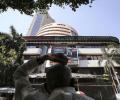
In the broader markets, the BSE Midcap and Smallcap indices extended gains and were up over 1% each

The investment will be made through a joint venture with Toshiba and Denso. The battery is the most expensive single part of an EV.

India is a market for low-priced cars with low running costs. The global majors don't have models that fit the bill; only Maruti and Hyundai have successful entry-level models, observes T N Ninan.

It may be the season for corporate matchmaking but India Inc's record of managing partnerships is far from impressive, says Shailesh Dobhal.

Analysts have predicted a 23 per cent volume growth for the auto segment between FY22 and FY25, riding on the company's differentiated EV and SUV plan. M&M is already a market leader with a 36 per cent share in electric three-wheelers, and its Zaheerabad plant in Telangana is ready to cater to demand. In the farm segment, the company plans to focus on niche electric products.

Ahead of the peak festive season, India's passenger vehicle makers are staring at a cumulative order backlog of nearly 500,000 units as chip shortage continues to cripple production. The crisis is forcing companies to change their production plans frequently and take a call on the variants they can manufacture based on the availability of semiconductors. The booking numbers are not a true reflection of demand, said manufacturers.

No Indian auto brand (including Tata or Mahindra) is well-known globally.

It has been a more than interesting and definitely an exciting last season with the battle of supremacy raging on between automakers.

In the Sensex pack, Sun Pharma was the biggest gainer, rallying 4.48 per cent, followed by Bajaj Auto, Tata Motors, Coal India, Hero MotoCorp, Maruti and HCL Tech, rising up to 3.01 per cent. While, RIL, PowerGrid, HDFC, L&T, IndusInd Bank, NTPC and Bajaj Finance declined up to 1.50 per cent.
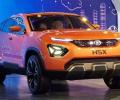
Some of the notable models set to make a debut next year include the Tata Harrier, the Mahindra S201, the Kia SP Concept, MG Motors' Boujun 530, and the Honda HR-V.

The dealers operating in the space have jumped nearly three times over the past two years.

On Monday, the biggest gainers in the Sensex pack were Sun Pharma, Bajaj Finance, Vedanta, Yes Bank, Tata Motors, HCL Tech, IndusInd Bank and Kotak Bank, HCL Tech, Infosys and Bajaj Auto.
The Indian racing sensation will participate in the British Formula three Championship series this year.

This is the highest any Indian company has been ranked on the Fortune Global 500 list.

Earlier in May, Ford India announced that it had dropped its plans to make electric vehicles (EVs) in India, which it intended to export, under the production-linked incentive scheme (PLI). Ford was among 20 companies that had signed a Champion OEM Incentive Scheme under the PLI project with the government in February this year. The decision comes as a blow for the 4,000-odd employees at Ford India's Maraimalai Nagar plant near Chennai and in Sanand, Gujarat. In September last year, the company had announced that it would exit the India market, which it had entered in 1995 through an on-again, off-again joint venture with Mahindra & Mahindra (they split in 1998, signed a JV in 2019 and split again in December 2020), retailing petrol and diesel brands such as the EcoSport, Figo, Aspire, and Endeavour.
